Tungsten Weights:
Are They Worth The Extra Cost?
Story By Margie Anderson
Who could ever have imagined that anglers would be paying more than $5 for a single worm weight? Boggles the mind, doesn’t it?
“You have to keep in mind that if something puts otherwise impossible fish in the boat for you, the check you cash after a tournament makes it well worth the few bucks you spent at the tackle shop,” says professional bass fisherman Gary Dobyns. “Tungsten weights opened up the whole world of punching to us. Bass school up under thick, dense mats of weeds when the sun is high, and it is almost impossible to get anything but a tungsten weight through those mats. The lead you’d have to use would be as big as your finger, and a lot of times it really turned the fish off.”
In fact, that very dilemma is what led to the first tungsten weights. Sam Aversa was a pro bass fisherman who wasn’t content to simply flip the edges of impenetrable weedbeds. He wanted in there. His company, Penetrater Weights, was one of the first to come out with tungsten weights. Tungsten is much harder and denser than lead, and the slick finish he puts on them adds to the ease of penetration.
There are different grades of tungsten. Dobyns explains that tungsten is actually a powder that is compressed into different forms.
Mixing the tungsten with other metals like tin, nickel and copper will lower the price of the weights but will increase their size. Tungsten is by far the densest element you can buy for less than precious-metal prices. It is actually as dense as gold, but it’s harder and about 100 times cheaper. Not only is a tungsten weight smaller than lead, it’s so much harder that it doesn’t get hung up as much.
“The hardness of the tungsten also makes it more sensitive,” Dobyns says. “It transmits vibrations up your line better. I know it sounds gimmicky, but it’s true.”
Punching
When you’re punching a tungsten-weighted plastic worm through a massive tangle of weeds or debris, getting the lure down there isn’t your only problem. Once you get bit, you’ve got to pull a wildly thrashing bass out of there, and it isn’t going to want to come along peacefully. Dobyns uses 65-pound test line and a hook that is made specifically for punching. A good, stout flipping stick is a must because you’re going to need a lot of power to haul a big bass out of cover that thick.
Punching isn’t limited to matted weeds or lily pads. Big floating rafts of debris get washed into Western reservoirs during spring when the snows melt, and getting through those is every bit as difficult as punching through the weeds that will grow later in the year. In summer, the water is cooler under there, and the fish also like the shade.
The Insert Debate
Dobyns prefers to use Tru-Tungsten weights, which have a powder coating that wears like the tungsten itself. Since the coating is so hard and slick, there is no need for inserts.
Aversa’s Penetrater Weights don’t have inserts either. He says you can order them with inserts, but he doesn’t like them.
“It’s not a question of if an insert will fall out, but when,” Aversa says.
According to Aversa, there isn’t a glue that will penetrate the pores on tungsten, so nothing really holds well. Liners sometimes push out when you peg the weight, and a Teflon liner is particularly hard to glue in. So when he gets an order for weights with liners, Aversa doesn’t use Teflon but a special industrial glue.
These inserts are designed to protect fishing line from burrs on the weight.
“I think they kind of defeat the purpose of the tungsten,” Aversa says. “Since they are between the line and the tungsten, they tend to dull the transmission of the vibrations.”
Dobyns adds that if an insert cracks, it frays your line.
Arizona tournament angler Gary Key doesn’t understand the controversy about inserts. He’s used tungsten weights extensively and has never had an insert fall out.
“I suppose if you really banged one around the rocks it might eventually fall out, but so far it hasn’t happened to me,” he says.
Key claims that the inserts in the weights he uses are so thin and tight to the metal that they make absolutely no difference in the sensation you get from the tungsten.
As for inserts popping out when you peg a weight, Key doesn’t worry about that either. He uses bobber stoppers to keep his weights in place, so nothing gets pushed through the weight except the line itself.
Tungsten Down Deep
Key fell in love with tungsten before he ever even saw a mat of weeds. Fishing the deep, clear reservoirs of Arizona doesn’t offer much opportunity for punching, but it definitely calls for finesse.
“Tungsten weights cost a lot more than lead, but I think they’re worth the extra couple of bucks,” Key says. “First of all, they’re so hard that they really telegraph what’s down there. When I’m pre-fishing, they let me know when something is a rock or a stump or just plain mud. With a tungsten weight on fluorocarbon or braid, I can read the date on a dime.”
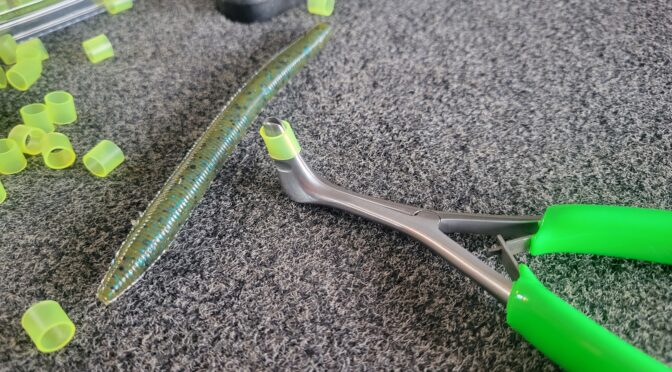
Key favors a long, skinny drop-shot weight that hardly ever gets hung up. He also uses larger tungsten weights for Carolina rigs. However, the tungsten Key really loves is the nail weight. He puts these tiny weights in wacky-rigged Senkos and just slays the bass.
“You can pitch these to trees and docks, but the real secret is that they are absolutely dynamite on deep-water humps and ledges,” Key says.
Without the little tungsten nail weights, it would take forever to get a Senko down there. Key likes to weight just one end of the Senko to make it wobble and dive.
Wes McCracken is another tournament angler who has found that tungsten is worth the money. A Texas rig is one of his favorites for fishing submerged trees, and he often fishes a very small Texas rig on spinning gear. He uses 12-pound test fluorocarbon and a 1⁄4-ounce or even smaller bullet sinker. For these lightweight worm rigs, McCracken uses a medium-heavy spinning rod with a fast tip and plenty of backbone. He can cast a 3⁄16-ounce sinker much better with this rig than with a baitcaster.
“It’s crucial to pick the right weight,” insists McCracken. “Sometimes one will outfish the other, even if the difference is really small. It changes the rate of fall. If you get bit on the fall, you know you’re using the right weight.”
Likewise, if you’re using the wrong weight, you’ll get slapped a lot but not bit. Sometimes even the type of weight can make a big difference.
“Jennifer and I were both fishing identical setups, but I was using tungsten and she wasn’t,” McCracken recalls. “I was getting bit way more often than she was. I hate to have to fish tungsten because it is so expensive, but if that’s what it takes, you have to do it.”
Tungsten — Not Just For Weights
The density and hardness of tungsten make it ideal for other bait applications as well. For instance, lure manufacturers have begun offering swimbaits that incorporate tungsten. Some of these lures have chamber and peg systems that allow you to quickly adjust the placement and number of tungsten balls in the lure so you can control the running depth and even the action of the lure.
Hand-poured worms with tungsten powder poured right into them are also available. This makes rigging much easier and makes the worms fall true.
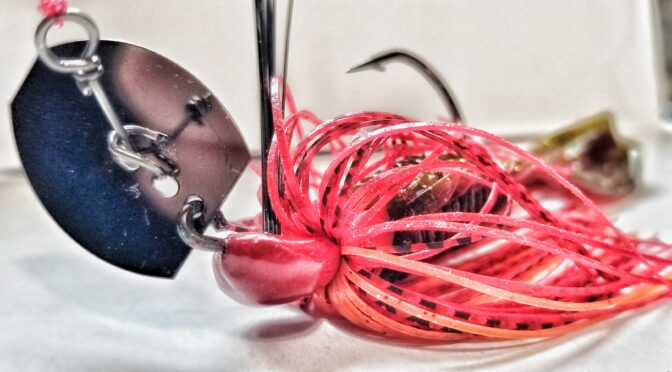
Tungsten spinnerbaits have become common in the lure industry over the last few years.
When it comes to jig fishing, tungsten jigs have an obvious benefit — they can be flipped into tight quarters.
Not-So-Heavy Metals
Another benefit of tungsten is that it’s non-toxic. These days, that’s a big deal. Many states have already banned lead or are considering banning it because lead sinkers can end up in birds and kill them.
If using a non-toxic weight is your major concern, there are other, cheaper alternatives. Non-lead sinkers such as brass, bismuth and steel are available. While they are not as dense as tungsten, they have other benefits. They may be bigger than the same weight in lead, but the hardness of these metals means less line wear. Lead is so soft that it can deform, making sharp edges right where your line enters the weight.
The only downside to tungsten is the price. Its density and hardness make it an ideal element for weights, and to tournament pros and avid amateur anglers, the benefits are well worth the price.
Story By Margie Anderson